THE LATEST ON THE BLOG
Helping Others Move from Burnout to Balanced

When the Little Stuff Piles Up
It wasn't one big thing
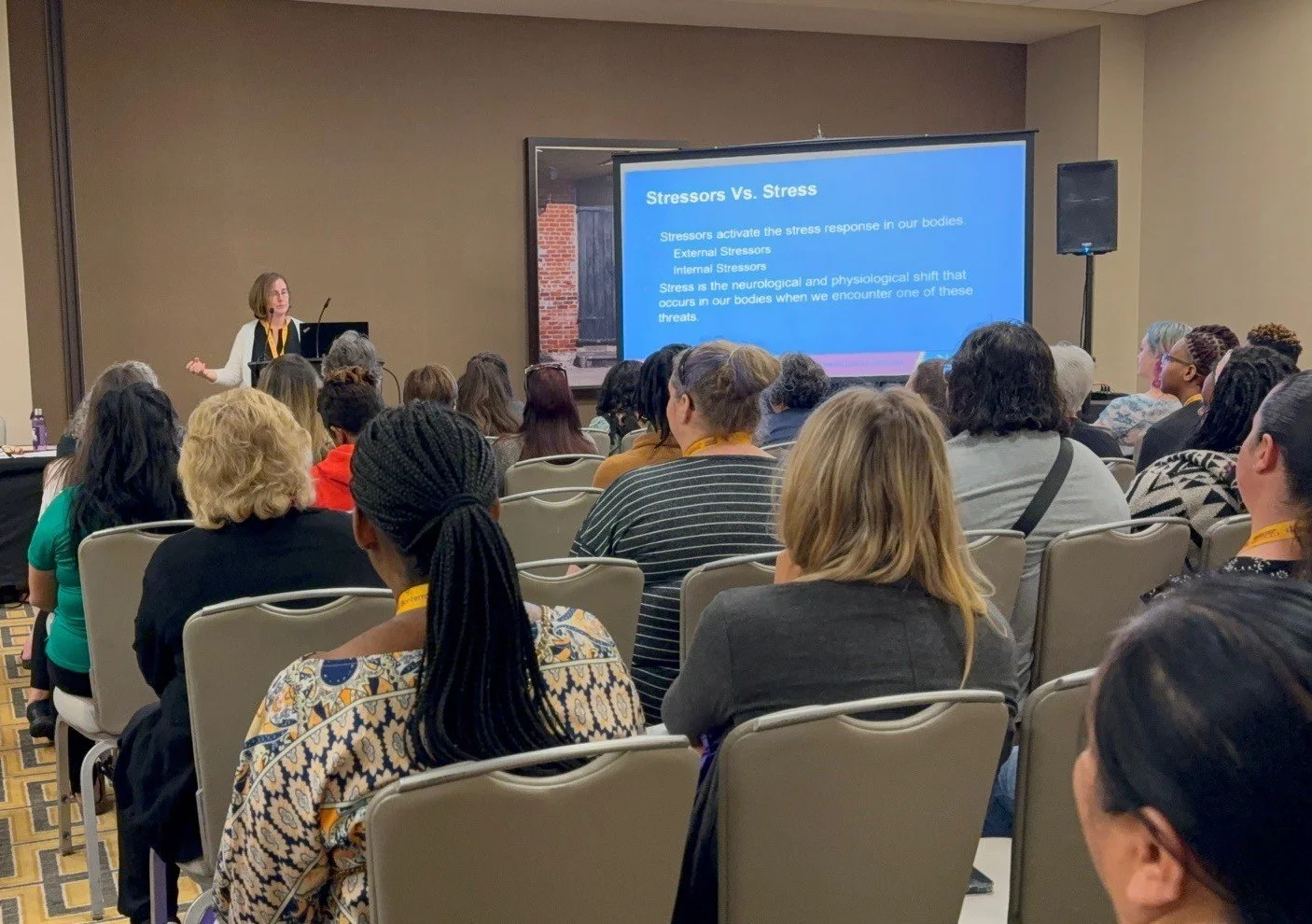
I've been teaching and talking about stress management for a long time, so you'd think I'd be immune to this. I'm not.
Over the last couple of weeks, I've been dealing with cell phone problems. I left a carrier I'd been with for 20 years after they told me my bill would go down. It went up. I tried to get it fixed, and they wouldn't budge. So I switched.
Then came the real fun. It took almost three weeks to change my husband's number, something that should have taken 10 minutes, tops. Between Friday and Sunday night alone, I spent eight and a half hours on it. Eight and a half hours of time and energy I did not need to spend that way.
At the same time, a food delivery service I really loved went from reliable to a revolving door of “sold out.” For six weeks, I either couldn't order anything or I managed to place an order, only to have it canceled right before delivery. Three times. I finally canceled my membership.
None of these things were big. That's exactly the problem.
We Finished It
There is a moment I want to tell you about.
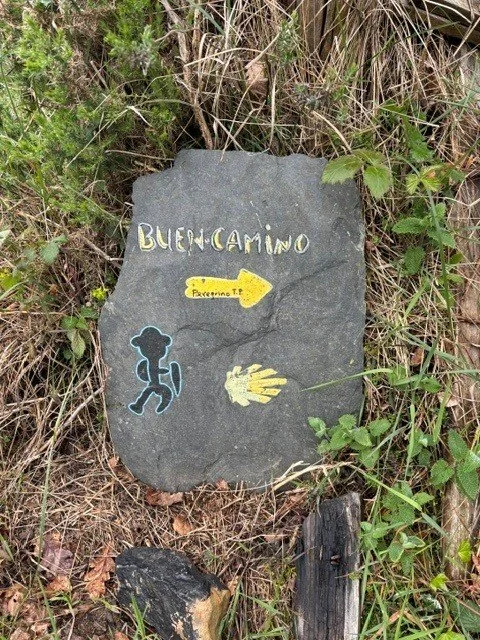
After days of steep climbs and rain and mud and shared rooms and sore everything, after the anxiety of returning to a trail that had taken something from me, after walking past the spot where I fell and feeling something shift loose inside me, we finished the route.
We walked the last mile of the section of the Camino Primitivo we had missed two years earlier. We reached the end of it.
And I stood there, and I felt something I want to try to describe accurately, because I think what it actually felt like is more useful than the version that sounds better.
What Hard Actually Looked Like
I want to be honest with you about something.
When people hear that I walked the Camino de Santiago, the response is often a kind of reverent admiration. It sounds romantic. Ancient trail, beautiful landscapes, spiritual journey. And it was all of those things.
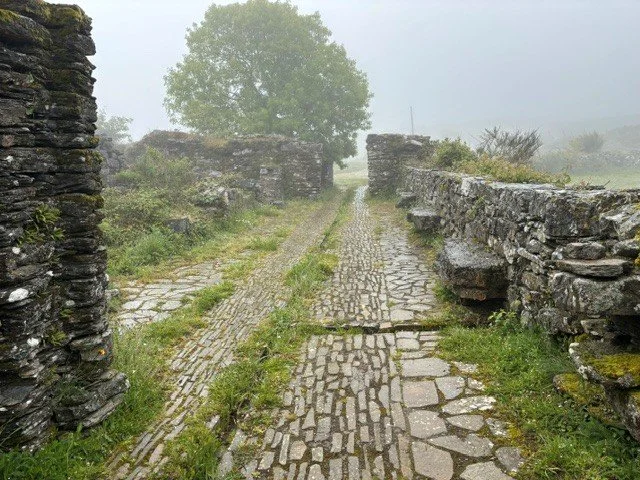
It was also genuinely, physically, unrelentingly hard. And I think it's worth talking about that part, because I think we do a disservice to hard experiences when we skip over the difficult details in favor of the beautiful ones.
This post is about what the trail actually looked like when it was hard. Because I think there's something important in that, especially for the helpers and caregivers and high-achievers reading this who have a long history of minimizing their own difficulty.
Going Back: What I Was Afraid Of and Why I Went Anyway
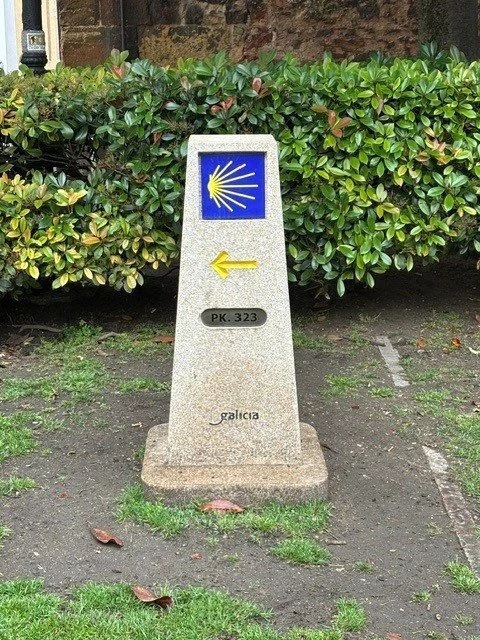
I told you in the last post that my husband and I went back to the Camino in 2026 to walk the section of the Primitivo route we had missed two years earlier.
What I didn't tell you yet is that I was nervous about it.
Not logistically nervous. Not is-my-gear-ready nervous. Genuinely, in-my-body nervous in a way I hadn't fully anticipated until we had landed in Spain and it suddenly became real.
The Trip That Didn't Go as Planned
I want to tell you about a trip that didn't go the way I had planned.
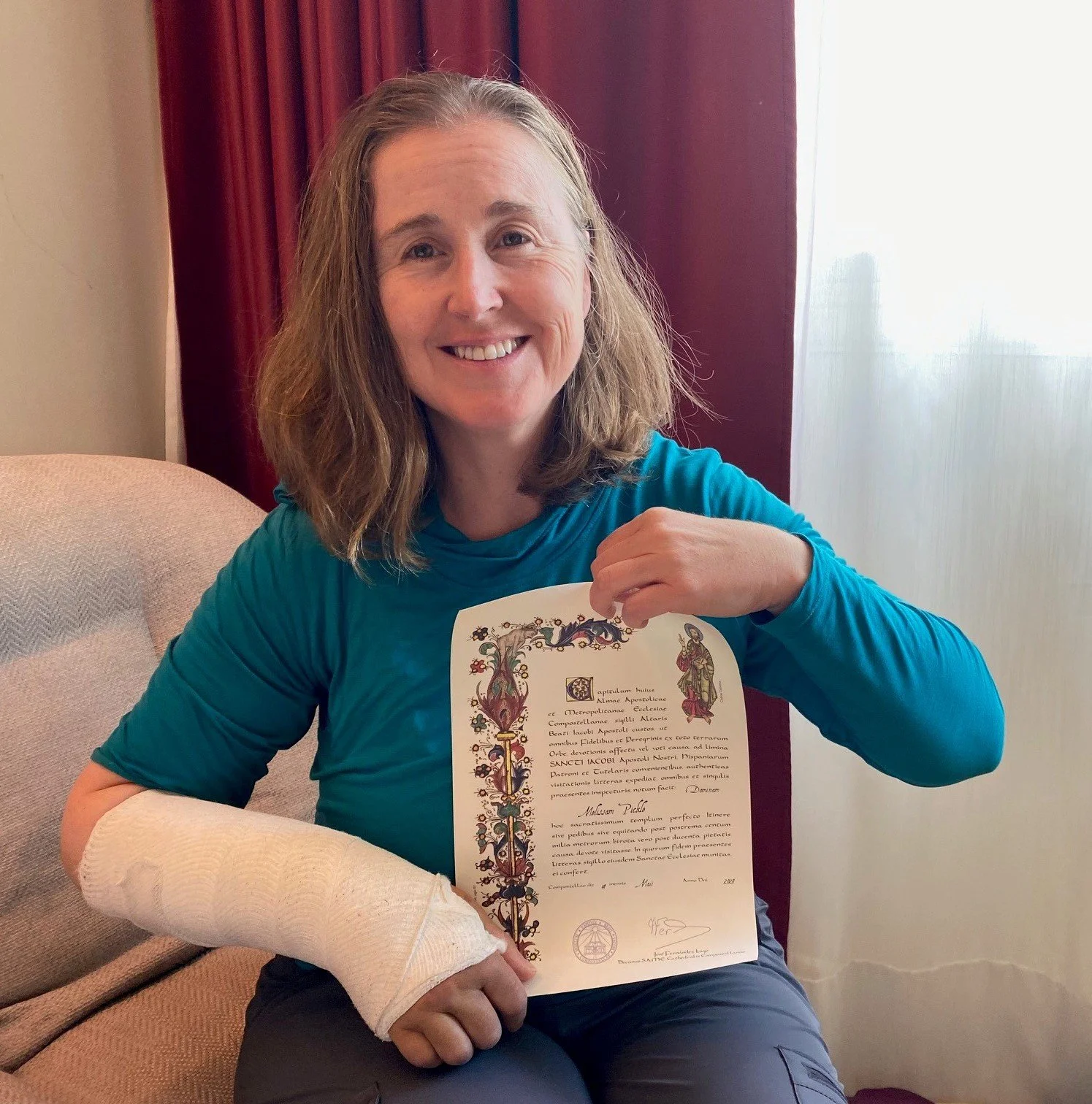
Not a little off track. Not a minor adjustment. The kind of off track where you end up in a hospital in a foreign country, your arm in a sling, looking at the trail you came all this way to walk and trying to figure out what comes next.
This is a story about the Camino de Santiago, part one of a four part series. But it's also a story about what we do when life disrupts the plan we were so sure about. And because that happens to be the topic I spend most of my professional life talking about, it felt like time to share it.

You Are Creative. You Just Haven't Been Refilling the Well.
When I first heard the term "creative rest," I almost skipped past it.
I did not think of myself as a creative person. I was not making art. I was not writing novels. I was a professional in a demanding field who was trying to figure out why she felt so flat and empty at the end of every day.
Creative rest, I assumed, was for other people.
It took me a while to understand that I had the whole thing backwards.

Your Nervous System Is Not Broken. It's Just Full.
You walk in the door at the end of the day and immediately feel irritable.
Or you sit in your car in the driveway for ten minutes before you can face going inside.
Or someone you love says something perfectly ordinary and it lands completely wrong and you snap at them, and then feel terrible about it.
You are not a bad person. You are not overreacting.
Your nervous system is full.

Why Your Brain Won't Stop. (And What to Do About It.)
My brain used to follow me everywhere.
Into the car. Into dinner. Into the shower. Into bed.
I would lie down at the end of an exhausting day, desperate for sleep, and my brain would helpfully begin replaying everything that happened, everything I forgot to do, everything I was worried about tomorrow, and several conversations from three years ago that I apparently still needed to process.
I thought that was just how brains worked.
I did not realize it had a name and a solution.

I Kept Pushing Through. My Body Kept a Tab.
There is a version of me, not that long ago, who wore exhaustion like a badge.
Not on purpose. I did not walk around announcing it. But I had absorbed the message that helpers push through. That a full calendar meant you were doing it right. That collapsing into bed at the end of a long day was evidence of a life well spent.
My body had a different opinion.

You Slept Eight Hours and You're Still Exhausted. Here's Why.
I want to start with something that might feel a little uncomfortable.
If you are tired and I mean bone-deep, can't-shake-it tired, more sleep is probably not the answer.
I know. That is not what we have been told. We have been told to sleep more, sleep better, get to bed earlier. And sleep matters, genuinely. But if you have ever slept a full night and still woken up exhausted, you already know that sleep alone is not fixing it.
There is a reason for that.
And once I understood it, everything about the way I had been approaching my own recovery changed.
Your Mindfulness Resource Guide: Apps, Websites, and How to Get Started
You've learned what mindfulness is, explored its benefits, and tried some techniques. Now you're at the critical juncture: will this become a passing interest, or an actual practice you maintain?
The truth is, most people need support to build a mindfulness practice. Going it alone is possible, but having guidance, structure, and variety makes it much more likely you'll stick with it. That's where resources come in.
Let's explore some tools available to support your practice, from free apps to comprehensive websites.
Mindfulness Techniques & Activities You Can Actually Use (No Meditation Cushion Required)
You understand what mindfulness is. You've seen the research on its benefits. Now comes the question everyone asks: "Okay, but how do I actually do it?"
Here's the good news: there are countless ways to practice mindfulness. The goal of any mindfulness activity, according to experts, is to "achieve a state of alert, focused relaxation by deliberately paying attention to thoughts and sensations without judgment." When you do this, your mind stays anchored in the present moment instead of drifting into the past or future.
Let's explore the main techniques, then dive into specific activities you can try today.
The Science-Backed Benefits of Mindfulness: What the Research Actually Shows
For years, mindfulness was dismissed by mainstream science as too "woo-woo" to take seriously. But something interesting happened over the past few decades: researchers started actually studying it. And what they found has been turning skeptics into believers.
The benefits of mindfulness aren't just anecdotal anymore. They're measurable, repeatable, and increasingly undeniable. Let's look at what the research actually shows.
What is Mindfulness Really? (And Why It's Not What You Think)
Mindfulness has become one of those buzzwords that gets thrown around so much it's almost lost its meaning. Yoga studios tout it, productivity gurus swear by it, and your wellness obsessed coworker won't stop talking about it. But what does mindfulness actually mean?
Strip away the Instagram quotes and the wellness industry hype, and you're left with something surprisingly simple: intentional and nonjudgmental present moment awareness.
Let's break that down, because each word matters.

I Woke Up One Day and Realized I'd Been Asleep for Years
Do you ever feel like you're going from one thing to the next without much thought? Constantly in rush mode, just trying to get through this moment to get to the next thing? Going through the motions?
I've been there. Multiple times. And here's what I've learned: living on autopilot isn't really living. It's just existing.
Life passes by while we're busy checking boxes, saying yes out of habit, and moving from task to task without actually being present for any of it.

I'm a Recovering Perfectionist (Still Recovering)
I want everything I create to be impeccable. Every event to go off without a hitch. I want to eat only healthy foods, exercise daily, meditate consistently, and write in my gratitude journal every single day.
None of this is realistic. It's not even healthy, it's created enormous stress in my life.
Here's the truth: I still want all these things. I still want my life to be perfect. I just realize it's not possible, and I'm not going to beat myself up about it anymore. At least not as much as I used to.
What to Do When You Fall Off Track (Because You Will)
Let me tell you what's going to happen.
You're going to start strong. You'll follow your plan. You'll build your habits. You'll feel proud of yourself for actually doing the thing you said you'd do. And then something will happen.
Maybe work will explode and demand all your energy. Maybe you'll get sick. Maybe a family emergency will take priority over everything else. Maybe you'll just have a rough week where nothing goes according to plan.
You'll miss a day. Then two days. Then a week. Before you know it, you're completely off track, staring at the gap between where you are and where you meant to be, feeling like you've failed again.
Here's what I want you to understand: this doesn't mean you've failed. This means you're human.
Building Habits That Actually Support Your Goals (Or Why Motivation Is Overrated)
You have a clear goal. You have a compelling why. You're motivated and ready to make this happen.
And motivation is lovely. I'm not knocking motivation. But here's what nobody tells you about motivation: it's the least reliable force in behavior change.
Motivation is fickle. It shows up strong on Monday morning and vanishes by Wednesday afternoon. It's there when you're watching inspirational videos but nowhere to be found when you're tired, stressed, or it's raining. Motivation is that friend who's super enthusiastic about plans but flakes when it's actually time to show up.
What you need aren't better motivational speeches. What you need are habits: behaviors so ingrained in your life that you do them automatically, without needing to feel motivated at all.
How to Actually Write a Goal That Works (Two Frameworks, Zero BS)
You've done the hard work. You've identified what you want. You've found your "why." You've got that one-sentence statement that makes your spine straighten when you read it.
Now it's time to transform that clarity into a concrete goal, something specific enough to work toward, measurable enough to track, and realistic enough to actually achieve.
This is where most goal-setting advice gets painfully corporate. You've probably seen those acronym frameworks that feel like they were designed in a boardroom by people who've never struggled to change anything in their actual lives.
Here's the thing: frameworks can be useful. They provide structure when you're staring at a blank page wondering how to turn "I want to be healthier" into something actionable. But they're tools, not commandments. Use what works, ignore what doesn't.
I'm going to give you two different approaches. Choose the one that resonates with how your brain works. Or take pieces from both. This is your goal, which means you get to design it in a way that makes sense for you.
Finding Your Why (The Real Reason Your Goal Matters)
Here's a question that sounds simple but rarely is: What do you really want?
Not what you think you should want. Not what would look good on Instagram. Not what your parents, partner, or society expects. What do you actually want?
Most of us can't answer this question clearly. We've spent so much time absorbing other people's expectations and scrolling through other people's highlight reels that we've lost touch with our own genuine desires.
And that's a problem. Because without a clear, personal, compelling reason for pursuing a goal, without your "why" you simply won't do the work when things get difficult. And things always get difficult.
LET’S GET STARTED
BOOK MELISSA to be a SPEAKER at YOUR EVENT